The short version
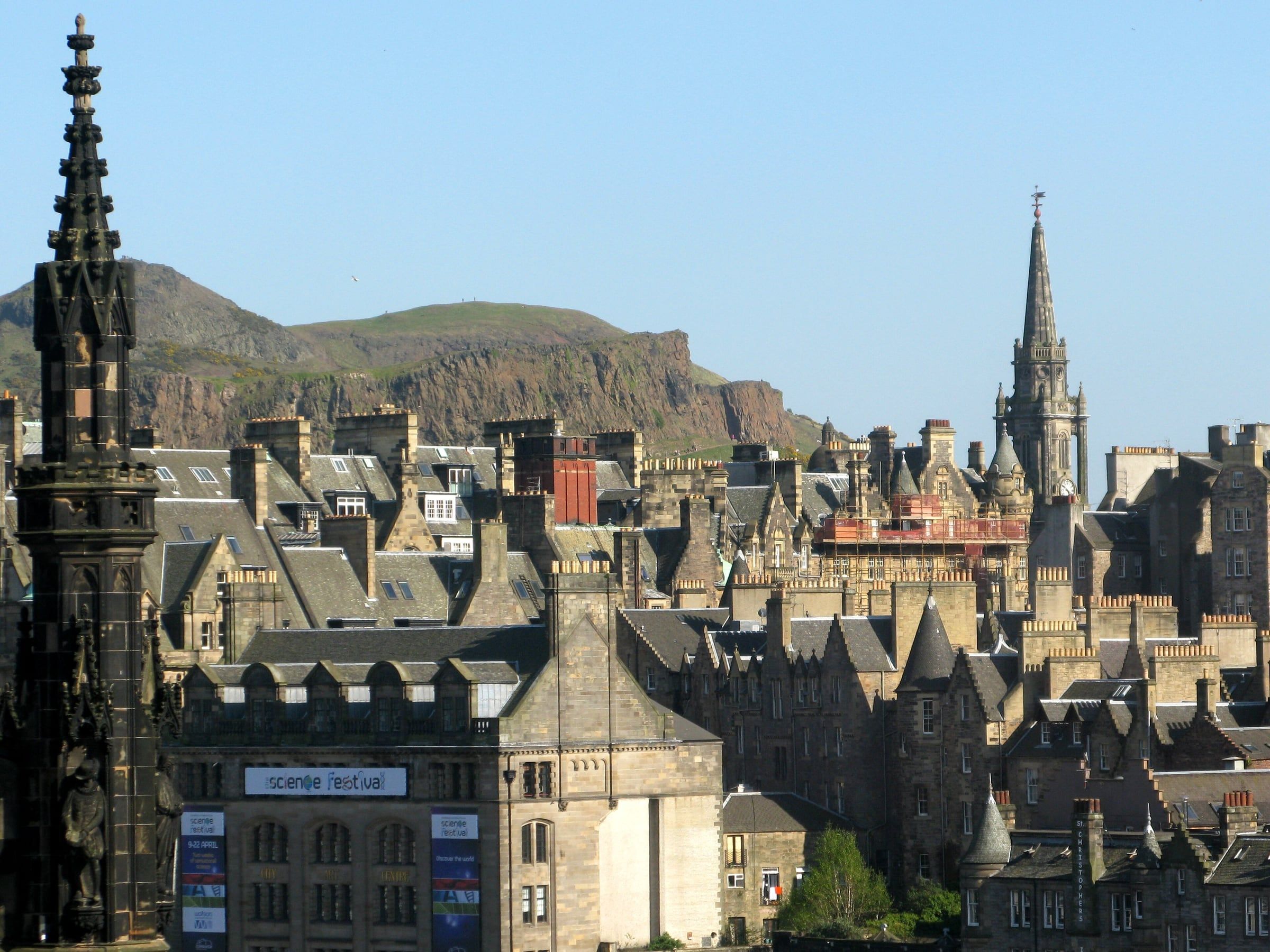
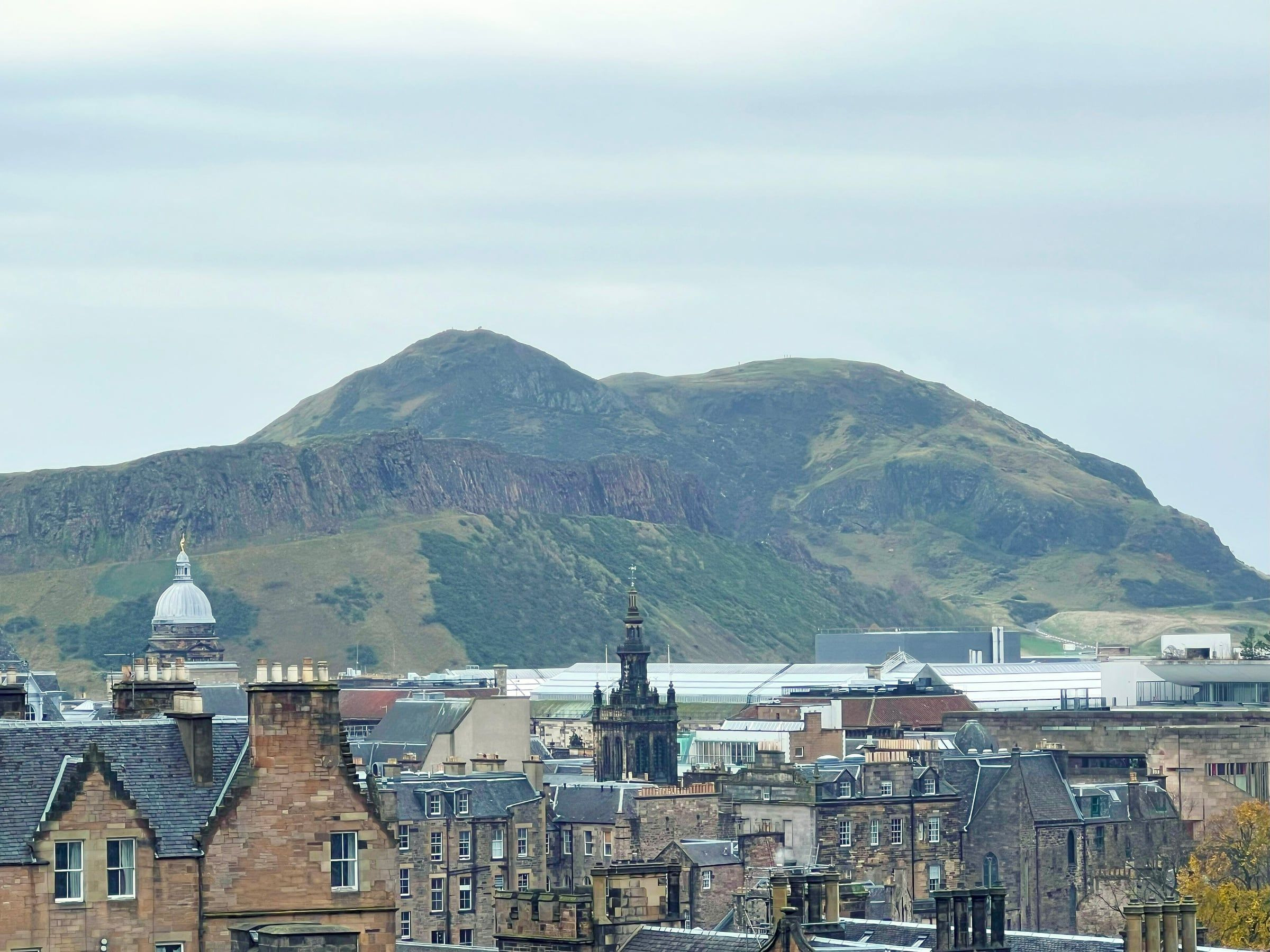
Arthur’s Seat is the highest point in Edinburgh, at 251 metres according to Wikipedia. It is what remains of a volcano that erupted about 340 million years ago, says Historic Environment Scotland (HES), which manages Holyrood Park. The park is open 24 hours a day, all year, and free to enter.
The hill sits directly behind the Palace of Holyroodhouse, so you can walk from the palace to the summit without a ticket or a bus. It is still a hill. The upper section is steep and rocky, the top is exposed and the paths turn slippery in rain. If you are pairing it with the palace, the visiting guide and the tickets and tours page cover the indoor half of the day.
What is closed right now
Check three things before you pick a route. HES posts the current position on its Holyrood Park page.
The Radical Road. This path runs along the foot of the Salisbury Crags cliffs and was once the obvious way up from the palace side. It was paved after the 1820 Radical War to give work to unemployed weavers, and it has been shut since a rockfall in 2018. HES’s visitor pages say it is closed because of a falling rock hazard. The same pages list the sections from the Hawse to the South Quarry as open and say work is under way to reopen parts of the path. None of that wording carries a year.
In July 2025 HES said it was aiming to reopen the stretch from the Hawse to the north end of the South Quarry in early 2026. The pages checked for this guide did not confirm that it had happened. Do not plan a route that depends on it, and never step over barriers. HES’s opening times page says ranger-guided tours of this area are offered, so check there for dates.
Roads. The High Road is closed to motor traffic. The Duddingston Low Road is closed to vehicles because of rockfall risk, with fencing for people on foot and cyclists told to dismount. HES links the rockfall risk to Samson’s Ribs, the columns of basalt on Arthur’s Seat. On Saturdays and Sundays, every road in the park is closed to vehicles during the day.
Climbing. HES lists the climbing areas as closed for safety.
The main route from the palace side
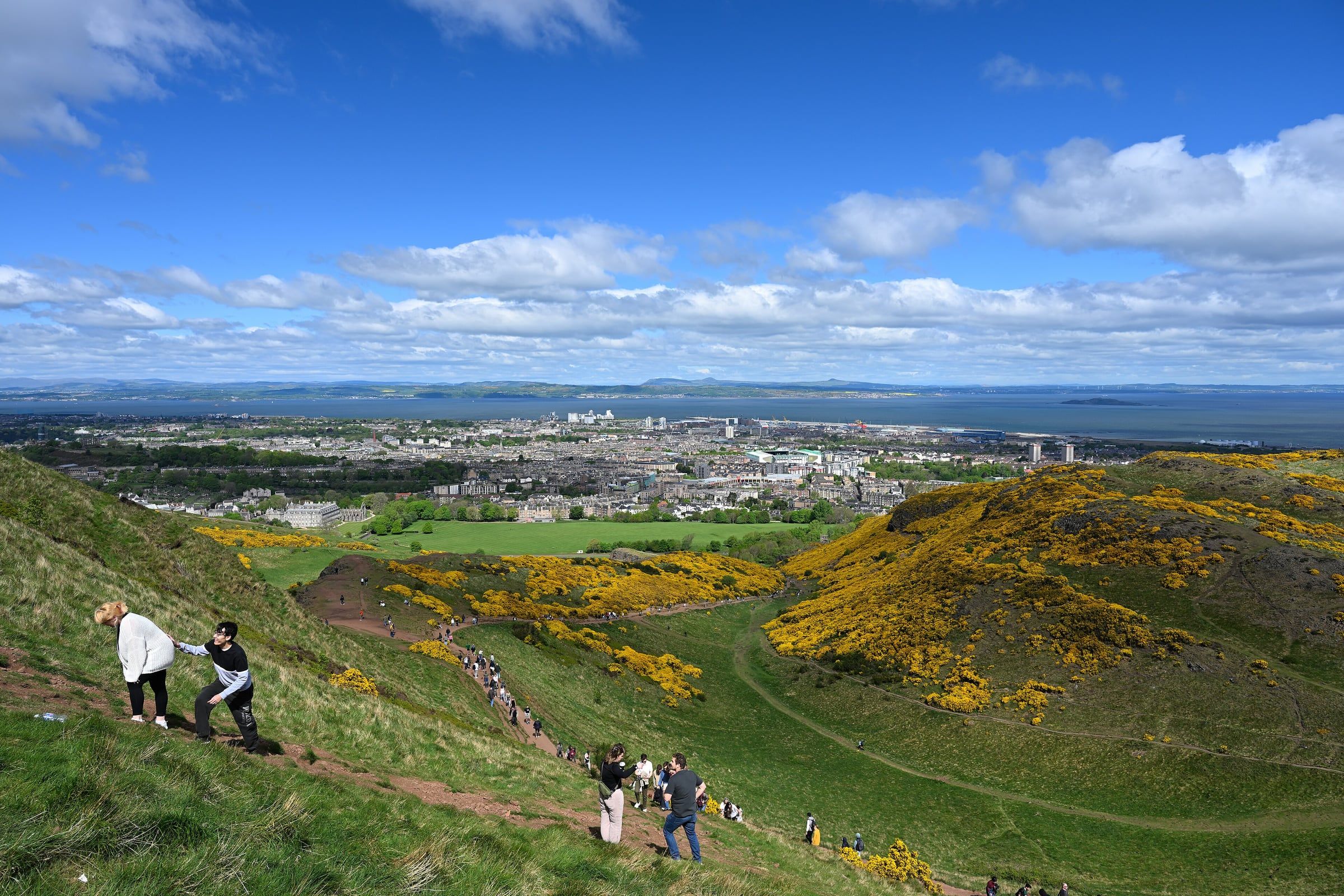
The usual route starts at the Broad Pavement car park on Queen’s Drive, next to the palace. It climbs past the ruins of St Anthony’s Chapel, then becomes steeper and rockier. Near the top a metal chain rail helps on the last rocks, and the final section is slippery when wet.
Wikipedia’s footpaths article puts this route at about 4 km, with 230 metres of climbing and about two hours of walking, and grades it moderate. Treat those as planning figures rather than a timetable.
The easier route from the east
The easiest way up is from the east, over the grassy slope above Dunsapie Loch, according to Wikipedia. There are two practical catches.
- The Dunsapie Loch car park is open to vehicles only from Tuesday to Thursday, 9:30am to 3pm.
- Roads are closed to vehicles on Saturdays and Sundays during the day. Closures start between 8:15am and 9am and roads reopen by 10pm, with longer closures in summer.
Both details come from the HES roads and car parks page, checked October 2026.
So on a weekend you arrive on foot or by bike. Cycling is allowed on the roads and the green path beside Queen’s Drive, but not off-road. For a first visit with children, or if steep rock worries you, aim for a Tuesday to Thursday and use this side.
Time, difficulty and the weather
Two hours covers the palace-side route at a steady pace. You do not need climbing skills, but you do need decent footing and a head for open ground. The summit is often windy, so it feels colder at the top than it did at the palace gate.
Go up in dry weather if you can, and see the best time to visit page for how the seasons feel in the city. The park is open all hours, but the paths are uneven. If you go near dusk or dawn, carry a torch.
HES’s safety advice is short: wear sturdy shoes with good grip and watch for sheer drops and slippery ground. Trainers with a proper tread are fine in dry weather. Walking shoes are better after rain. The toilets are by the Holyrood Park Education Centre, behind the palace, and from October to March they are open daily from 8am to 3pm, according to HES’s plan your visit page (checked October 2026). Dogs are welcome, and drones need HES permission. Camping, fires, barbecues and golf are not allowed anywhere in the park.
What you pass on the way
Salisbury Crags. These are cliffs about 46 metres high, according to Wikipedia. In the 18th century the geologist James Hutton studied the rock here, and his observations helped develop the idea of deep time, says HES.
St Anthony’s Chapel. A ruin, built no later than the early 15th century. Only the north wall and part of the west wall are left (Wikipedia). It stands about 100 metres from St Margaret’s Loch.
Dunsapie Loch. A small artificial loch between Dunsapie Hill and Arthur’s Seat that attracts several bird species.
Duddingston Loch. A hoard of late Bronze Age weapons was found here in 1778, which HES calls one of the most spectacular finds from the area.
HES also offers a free audio guide through the Geotourist app.
Getting there and parking
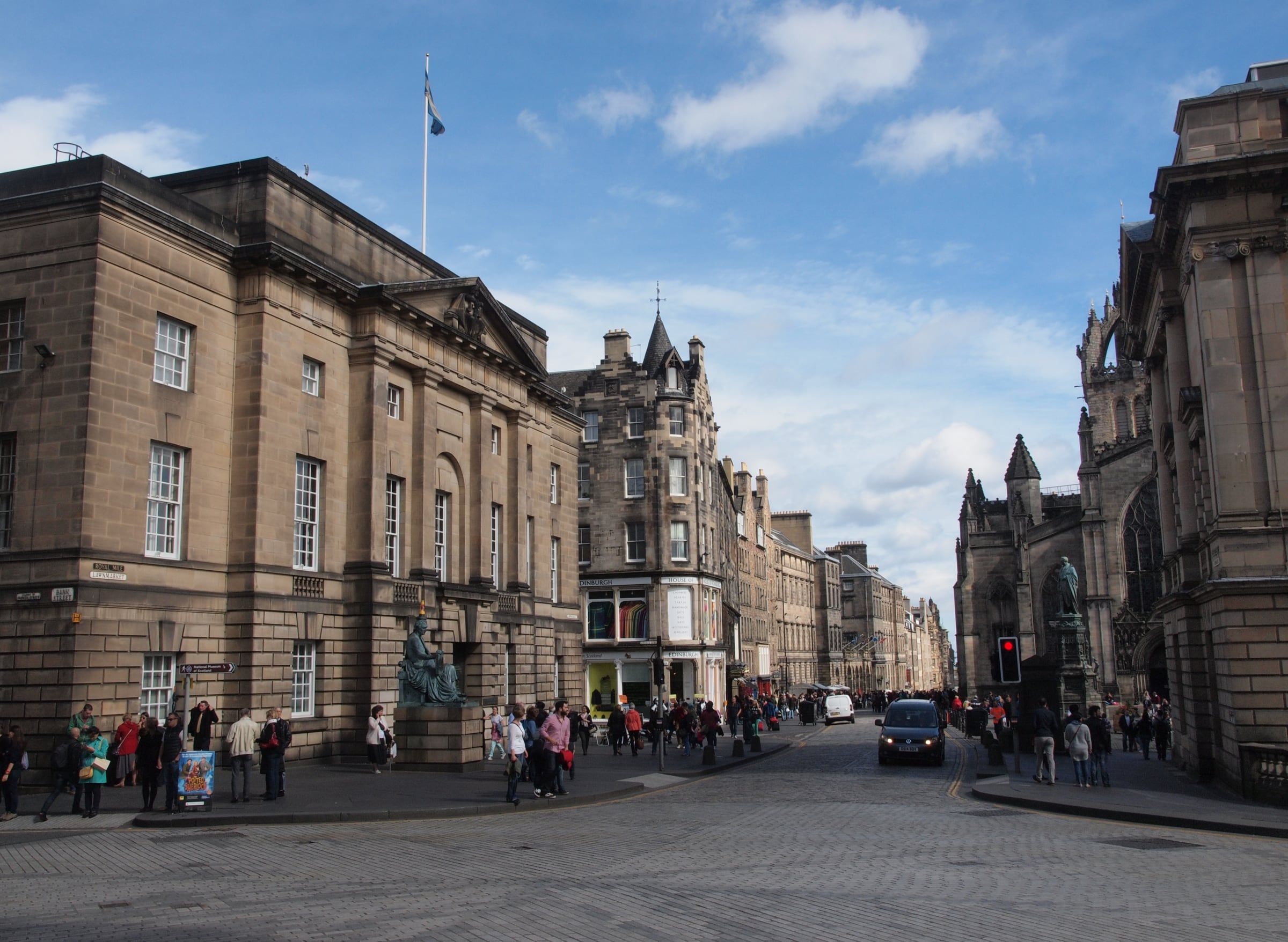
The park starts beside the palace at the foot of the Royal Mile, and HES says it can be entered from many points around its edge. See the Royal Mile guide for the walk down. Lothian Buses service 35 stops outside the Scottish Parliament, opposite the palace (Scottish Parliament). The getting there page covers trains and airport routes.
The Broad Pavement car park charges £1 per hour from 8:30am to 5:30pm daily, except Saturdays, Sundays, Good Friday, Easter Monday, 25 and 26 December and 1 January (HES roads and car parks page, checked October 2026). Overnight parking is not allowed in the park.
When a guided hike is worth it
You do not need a guide to climb Arthur’s Seat. A guide earns their fee if you want the geology and history explained as you go, if you are travelling alone and would like company, or if you have only a morning and want someone else to plan the route.
Before you pay, look at the free options. HES runs ranger walks, including Arthur’s Amble, a gentle free walk covering geology, wildlife, archaeology and history on selected dates until 7 March 2027. It also runs Holyrood Family Adventure sessions on selected dates from 15 October 2026 to 17 February 2027. Check the HES what’s on page for dates and booking.
The guided hike below runs about two hours. Check the listing for the meeting point, group size and what happens in poor weather before you book.
Short on time or energy? Calton Hill is lower, at 103 metres, and also has views over the city.